


Buying property in Dubai can feel exciting, a little confusing, and honestly…
a bit overwhelming.
You see attractive listings every day, prices that seem reasonable, and communities that feel straight out of a movie.
But the moment someone says “Is it freehold or leasehold?” you might pause for a second, unsure what that actually means for you as a buyer or investor.
You’re not alone.
Many clients ask the exact same question.
And the funny part?
Once you understand the difference, everything becomes far clearer, almost like adjusting the brightness on your phone after a long night.
Let’s walk through it together, casually but clearly, so you’re not second-guessing your decisions later.
A Quick Snapshot Before We Start: Leasehold vs Freehold
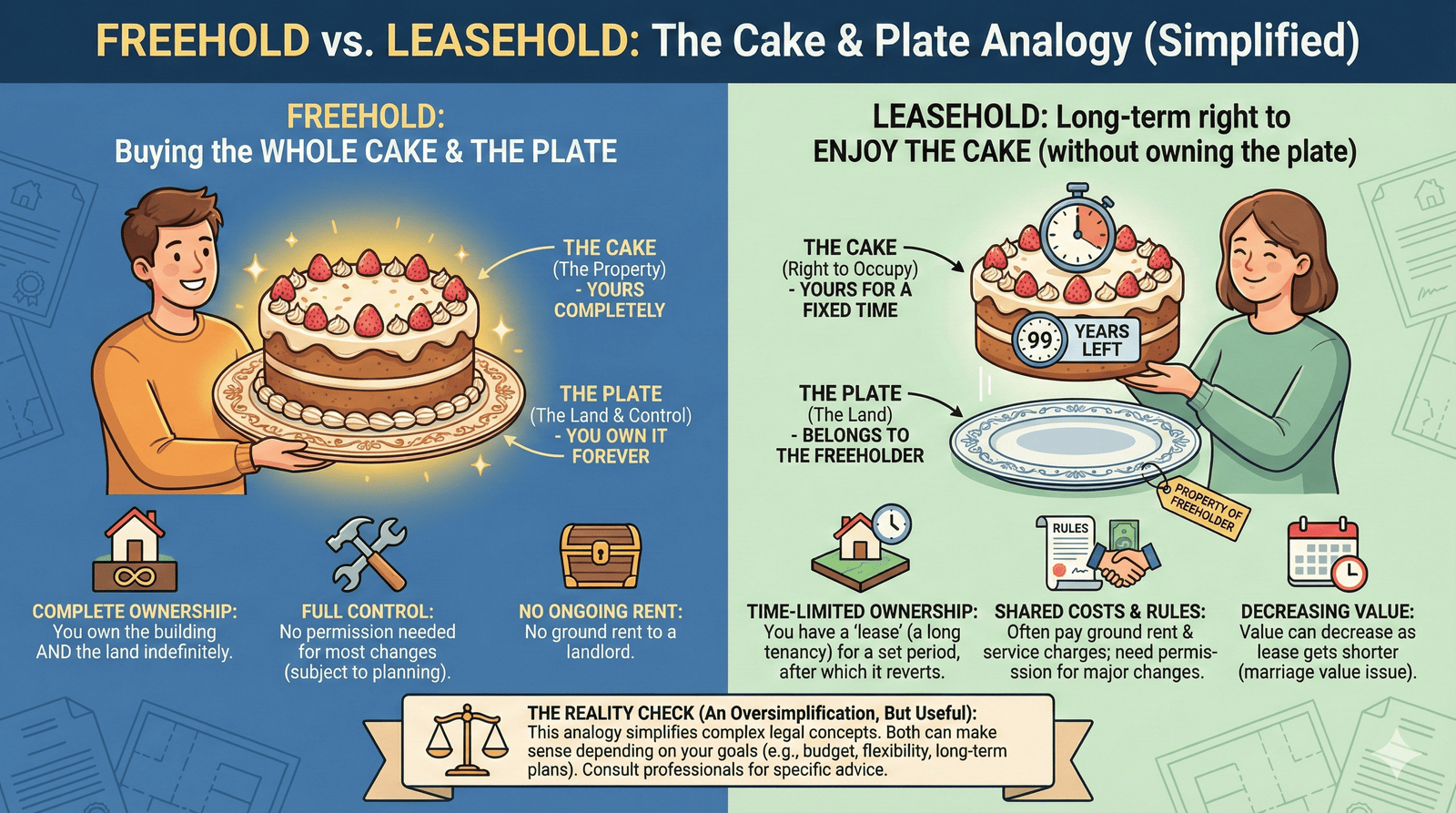
Think of freehold as buying the whole cake, and leasehold as getting a long-term right to enjoy the cake without technically owning the plate it’s on. Both can make sense depending on your goals… although yes, that’s an oversimplification. But sometimes oversimplified analogies help more than long definitions.
Still, let’s expand it properly.
What Exactly Is Freehold Property in Dubai?
Freehold is the more straightforward category. If you’re buying a freehold property in Dubai, you legally own:
- The unit (villa, townhouse, apartment)
- The land it stands on (for villas and plots)
- The full rights to sell, rent, or transfer ownership without restrictions
And the ownership stays with you permanently. There’s no expiry. No countdown clock. It’s yours, and your heirs can inherit it.
Freehold ownership became accessible to foreign investors around the early 2000s, and honestly, that shift changed the entire shape of the Dubai property market. Today, areas like Dubai Marina, Downtown Dubai, Arabian Ranches, JVC, and Palm Jumeirah are full freehold zones, attracting both expats and international investors who want long-term security.
Why freehold feels “safer” for many buyers
People like the idea of complete control. It’s human nature. If you’re spending serious money, you want the freedom to modify the property, rent it out on your terms, or sell whenever market conditions look attractive. Freehold gives you that comfort.
And What About Leasehold Property?
Leasehold means you don’t own the land. Instead, you lease the property for a long period — usually up to 99 years. During that period, you have full rights to live in it, rent it out, or even sell the remaining lease term to someone else.
But once the lease expires, ownership returns to the freeholder (typically the developer or the landowner).
So is leasehold a bad thing?
Not really. Some investors prefer it because:
- Prices are often lower compared to freehold zones
- Certain premium locations might only be available through leasehold
- Long-term leases (like 90+ years) still feel almost like ownership
- Rental yields can still be strong
It’s a bit like getting a really good car on a long lease — you enjoy it fully, even if you don’t technically own the chassis.
Common Misconception: “Leasehold Means No Control”
You still have plenty of control. You can sell the lease, mortgage the property (if banks approve), and rent it out. You just can’t make major structural changes without the freeholder’s approval, and you’ll have to follow the exact terms written in the lease contract.
That’s where things get technical, which is why a skilled property advisor helps you understand the fine print before signing anything that ties you in for decades.
Leasehold vs Freehold: A Side-by-Side Comparison
Sometimes it helps to see things next to each other:
Ownership:
- Freehold: Full permanent ownership
- Leasehold: Long-term lease, usually up to 99 years
Control:
- Freehold: Maximum control
- Leasehold: Controlled, but rights depend on lease terms
Price:
- Freehold: Higher entry cost
- Leasehold: Usually more affordable
Resale:
- Freehold: Easier, higher demand
- Leasehold: Can be sold but depends on remaining years
Long-term security:
- Freehold: Highest
- Leasehold: Strong, but not absolute
Ideal for:
- Freehold: End-users, long-term investors, family buyers
- Leasehold: Budget-conscious investors, those seeking specific locations
Where Do You See Leasehold Properties in Dubai?
Even though Dubai is mostly freehold-friendly for expats, a few areas still have leasehold titles. For example, certain parts of Deira, older districts around Bur Dubai, and some locations managed by major government-linked developers are leasehold by structure.
Interestingly, some clients don’t mind leasehold in these areas because of community charm, cultural vibes, or strong rental demand.

I once had a client who specifically wanted a property near her workplace in an older district. She said, “I don’t care about owning the land. I just want to wake up 2 minutes away from my job.” And honestly, that’s a valid priority.
Life isn’t only about long-term ROI; sometimes convenience wins.
And What About Freehold Zones?
That list is long. Most popular communities for investors and expats are freehold. A few names you’ll recognize immediately:
- Dubai Marina
- Business Bay
- Jumeirah Village Circle (JVC)
- Downtown Dubai
- Arjan
- Dubai Hills Estate
- Palm Jumeirah
- Meydan
- Jumeirah Lake Towers (JLT)
These areas attract both end-users and international investors because of the security of ownership and high liquidity.
Which One Is Better for You?
Honestly, there’s no universal answer.
Freehold makes sense if:
You want complete ownership, long-term investment safety, and flexibility to upgrade or sell easily.
Leasehold makes sense if:
You’re price-sensitive, or you’re targeting specific districts not available as freehold, but still want long-term usage rights.
Here’s the thing: many new investors assume freehold is always better, but sometimes leasehold offers surprising advantages. Lower purchase price means lower mortgage payments, lower upfront cash, and sometimes higher rental yield percentages.
A friend of mine bought a leasehold unit purely because it offered a rental return that beat several freehold options. And his logic was simple: “Why should I ignore numbers just because of a label?”
You see? Different goals create different choices.
A Small Tangent… Why Does Dubai Have Both?
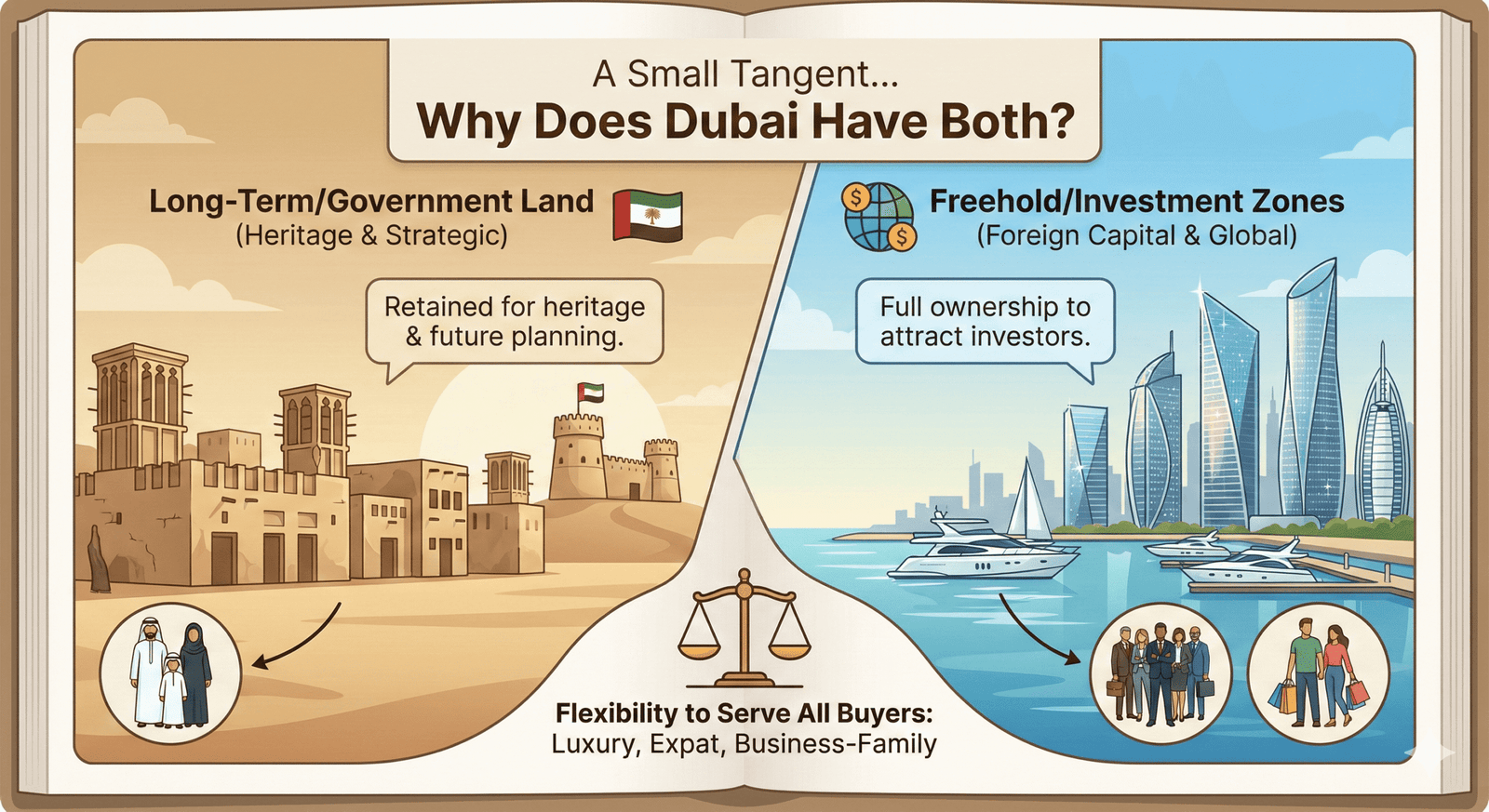
Dubai has built its real estate model with flexibility in mind. Some land is kept under long-term government or institutional ownership for heritage or strategic reasons. Other areas were developed with full freehold rights to attract foreign capital and global investors.
Having both systems allows the market to serve all types of buyers — the luxury-seeking homeowner, the first-time expat investor, and even the business-family making long-term future plans.
So How Do You Choose Confidently?
You start by understanding your purpose:
- Are you buying to live comfortably for the next 15 years?
- Are you purely chasing ROI?
- Are you planning to eventually resell?
- Do you care more about location than ownership type?
- Are you working with a fixed budget?
Once your purpose feels clear, the answer almost reveals itself.
But yes, a little guidance helps. I always tell clients:
“Don’t choose based on what sounds better. Choose based on what fits your plan.”
Final Thoughts: The Decision Gets Easier with the Right Advice
Leasehold vs freehold isn’t a battle of good vs bad. It’s more like choosing between two different types of investments, each with its own charm and limitations.
What matters most is clarity. When you understand the rules, your confidence rises. And when your confidence rises, you make smarter choices.
If you ever feel stuck between a few options, it helps to get advice from someone who deals with these things daily, who understands the paperwork and the market heartbeat.
Sometimes a short conversation can save you from years of confusion.
